


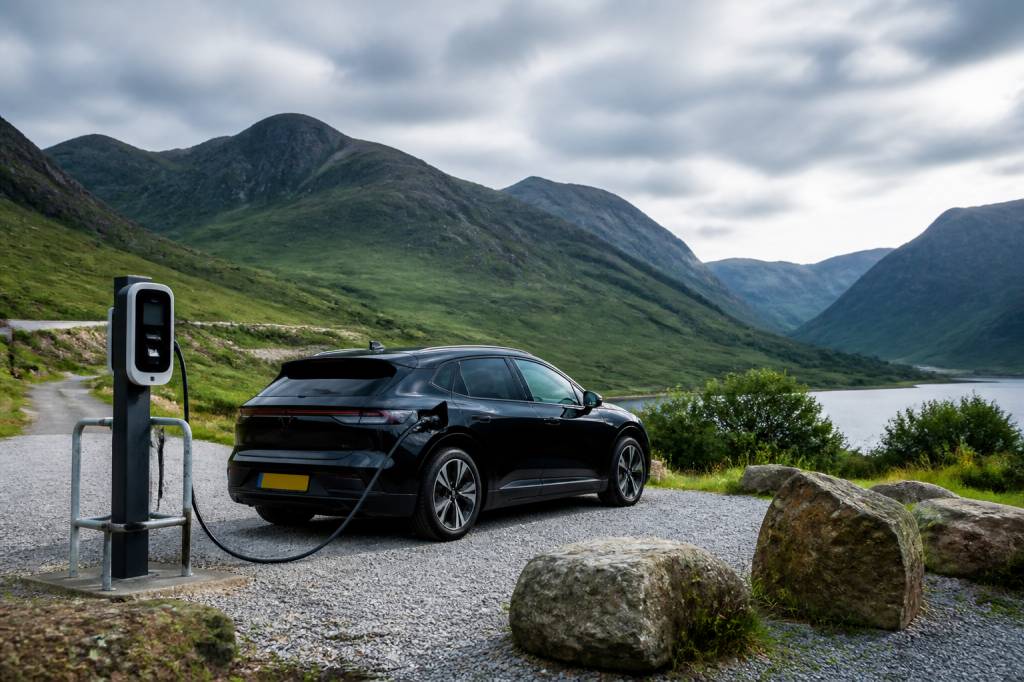
Electric road trips are no longer a niche idea in Britain. They are becoming part of normal travel planning, from weekend breaks to cross-country drives. More charging points, better route planning tools, longer-range EVs, and growing public comfort with electric driving are changing how people move around the country.
For travellers, this shift brings both opportunity and a few practical questions. Can you really drive from London to the Lake District without stress? How easy is it to charge on motorways, in towns, or near attractions? What should you expect if you are planning a holiday around an electric vehicle rather than a petrol car?
The short answer is this: electric road trips in Britain are getting much easier, but they still reward good planning. If you know where to charge, when to charge, and how to build your route, an EV can be a very smart way to explore the UK.
Why electric road trips are growing fast
Britain has seen a clear rise in electric vehicle ownership, and the travel industry is adapting to match. This matters because road trips depend on confidence. Travellers need to know they can reach their destination, stop when needed, and avoid wasting time searching for a charger at the last minute.
Several things are pushing the change forward:
In practical terms, this means electric travel is moving from “possible with effort” to “easy enough for most trips, as long as you plan ahead.” That is a major shift.
It is also changing the way travellers think about the journey itself. With petrol cars, people often focus on speed and distance. With EVs, the journey becomes a series of manageable segments. For some travellers, that actually makes the trip more relaxed. A charging stop can be a coffee break, a lunch stop, or a chance to stretch your legs instead of a delay to endure.
What travellers can expect on Britain’s roads
Britain’s charging network is far stronger than it was a few years ago, but it is not perfectly even. Motorways and major routes usually offer the best coverage. Rural areas, national parks, and smaller coastal towns can still be more patchy, especially if you are looking for rapid charging.
That said, the situation keeps improving. Service stations on major roads often have multiple rapid chargers now, and many destinations that rely on tourism have added public charging to support visitors. Hotels, holiday parks, shopping centres, attractions, and some car parks now offer EV charging as an added service.
The biggest practical difference for travellers is charger speed. Not all chargers are the same, and this affects how you plan your day.
If you are used to filling a petrol tank in five minutes, this needs a small mindset change. But it does not need to be complicated. A road trip in an EV is usually about timing your stops well rather than worrying about constant charging.
One common mistake is assuming you can always “just find something nearby.” In busy travel periods, chargers can be occupied. On bank holidays, summer weekends, and school holidays, that matters. A backup option is always useful.
How to plan a smooth electric road trip
Good planning makes all the difference. The best electric road trips are the ones where charging is built into the route from the start, not treated as an emergency fix.
Before you set off, check four things:
Real-world range is especially important. Wind, rain, hills, traffic, cold weather, and motorway speeds can all reduce battery performance. A car advertised with a 300-mile range may not deliver that in winter on a fast-moving motorway. This is normal, not a failure.
Route-planning apps are now one of the most useful tools for EV drivers. They can show charger locations, plug types, speeds, availability, and sometimes live status. That is a huge help when you are choosing between two service stations or deciding whether to stop earlier than planned.
It is also worth checking whether your hotel or accommodation offers overnight charging. This can simplify the trip a great deal. Charge while you sleep, leave in the morning with a full battery, and reduce the need for extra stops the next day. Simple, and very useful.
If you are travelling with family, remember that charging stops do not have to feel like waiting around. Choose places with toilets, food, and something for children to do. A charger beside a decent café is far better than a charger in an empty car park with no facilities. Nobody wants that.
Where electric road trips work best in Britain
Some British trips are naturally better suited to electric travel than others. That does not mean you cannot go anywhere. It simply means some routes are easier than others.
Motorway-based journeys are generally the simplest. Think London to Manchester, Birmingham to Glasgow, or Bristol to Edinburgh. These routes usually have stronger charging infrastructure and more reliable service-station options.
Popular tourism regions are also becoming easier for EV travellers, especially where local councils and businesses have invested in visitor charging. Good examples include:
Urban destinations are often the easiest of all. Cities such as London, Manchester, Edinburgh, Bristol, and Cardiff usually have multiple charging options, although parking rules and charging costs vary. If you are staying in a city centre, check whether your accommodation has on-site charging or access to nearby public chargers.
Rural and remote areas still need more care. If your route includes smaller islands, mountain roads, or less densely populated parts of the UK, charging options may be limited. This does not mean “don’t go.” It means “check twice.”
What to know about costs, time, and convenience
Electric road trips can be cheaper than petrol or diesel journeys, but not always in the same way. The savings depend on where and how you charge.
Charging at home is usually the cheapest option by far. Public charging is more variable. Slow chargers are often cheaper, while rapid chargers on major routes can cost more. Some networks also use membership prices, while others charge a flat rate or by the minute. It pays to read the small print, because the cheapest-looking charger is not always the cheapest in practice.
Time is another factor. EV drivers often need to think about charging as part of the trip schedule. That sounds restrictive, but it can work well if you treat the stop as part of the experience. A 20 to 40 minute rapid charge can cover lunch, a toilet break, or a short walk. Overnight charging at a hotel removes much of the pressure entirely.
Convenience is improving too. Many charging hubs now have more than one charging point, good lighting, and nearby food or retail options. Some are still basic, of course. But the overall trend is towards more traveller-friendly facilities.
One useful habit is to avoid arriving at a charger with a nearly empty battery if you do not need to. It is often better to top up when you have a comfortable buffer. That gives you more flexibility if a charger is busy or temporarily out of service.
Accommodation, attractions, and the rise of EV-friendly travel
British tourism businesses are noticing that EV drivers need practical support, not just pretty views. Hotels, inns, holiday parks, and attractions are starting to treat charging as part of the guest experience.
This is good news for travellers. When a hotel offers charging, it can remove a major piece of route planning stress. The same applies to attractions with on-site charging, especially if you plan to spend several hours there anyway.
If you are booking accommodation, look for:
Attractions are following the same pattern. Large visitor sites, heritage properties, theme parks, and retail destinations are increasingly aware that charging can influence where visitors choose to stop. That makes sense. If you are driving an EV, a place with charging is often more attractive than one without it.
For travellers, this can shape the whole itinerary. You might choose a castle, a garden, a beach town, or a country house partly because it is EV-friendly. That is a new kind of trip planning, and it is becoming more common.
Things travellers should watch out for
Electric road trips are easier than they used to be, but a few issues still catch people out. Knowing them in advance saves time and frustration.
First, not every charger works with every car in the same way. Plug type and charging speed matter. Most modern route-planning tools help with this, but it is still worth checking before you leave.
Second, payment systems are not fully standardised. Some chargers accept contactless cards. Others need an app or RFID card. If you are crossing regions or using several networks, keep your charging accounts organised before departure.
Third, weather matters more than many first-time EV drivers expect. Cold weather reduces range, and high-speed driving increases energy use. If you are heading to Scotland in winter, or planning a fast motorway run in heavy rain, build in extra margin.
Fourth, do not assume every destination charger will be free. Some are included with the room, while others are billed separately. This is fine, as long as you know in advance.
Finally, remember that public charging etiquette matters. If you finish charging, move the car. It is a small thing, but on busy travel days it makes a real difference to other drivers.
What the future looks like for electric travel in Britain
The direction of travel is clear. Britain is moving towards a future where electric road trips are ordinary, not experimental. More chargers, better technology, and stronger integration with hotels, attractions, and route planning tools will make the experience simpler year by year.
We are likely to see:
For travellers, that means less time worrying about logistics and more time focusing on the trip itself. And that is really the point. A road trip should feel like a break, not a test of endurance and app usage.
If you are thinking about trying an electric road trip in Britain, the best advice is simple: plan the first one carefully, keep your route realistic, and choose places that make charging easy. After that, it becomes much more natural. In many cases, you may even find that the journey feels calmer than a traditional petrol run. Fewer fuel stops, more useful breaks, and a more relaxed rhythm can make a surprising difference.
Britain is not fully there yet, but it is far enough along for electric road travel to be genuinely practical. For today’s traveller, that opens up a lot of possibilities.