


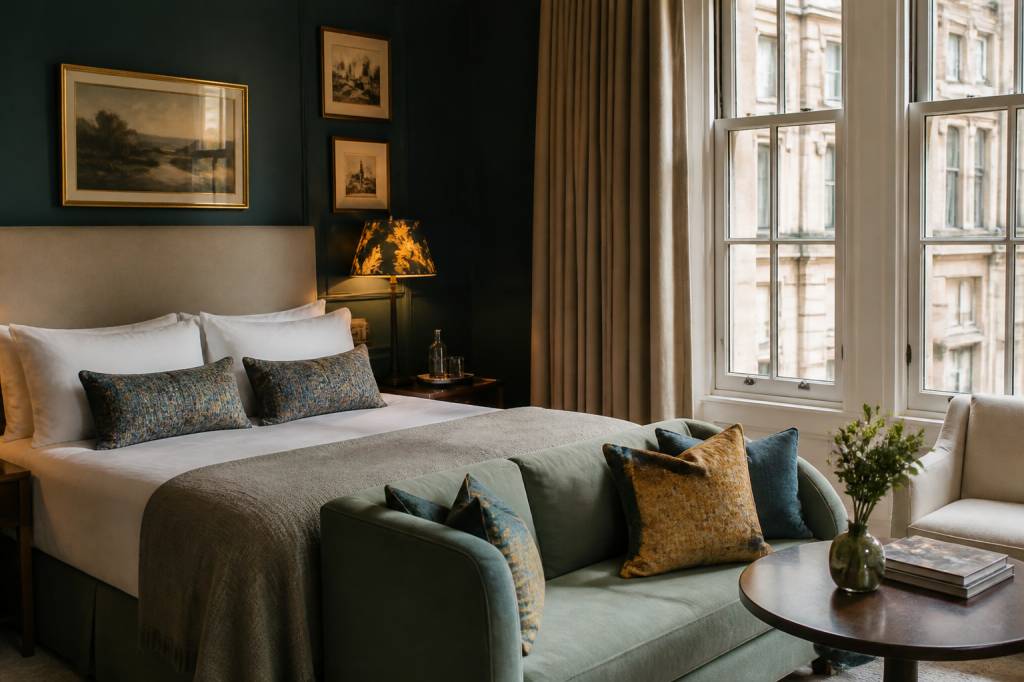
Finding the right boutique hotel in Edinburgh can make a city break feel carefully planned rather than rushed. The city has plenty of character, but that also means the accommodation choice matters. Stay in the wrong area and you may spend half your trip on buses, taxis, or steep hills. Choose well, and you can walk to the castle, slip into a good café before breakfast rush, and return to a quiet room after a busy day of sightseeing.
Edinburgh is a strong destination for boutique stays because it offers variety. You will find grand Georgian townhouses, converted historic buildings, stylish design-led hotels, and smaller properties with a clear sense of personality. Some focus on luxury. Others are compact, practical, and well placed for exploring on foot. The key is knowing what matters most for your trip. Location? Style? Breakfast? Parking? A deep bath after a cold day in the Old Town? Those details matter more than many people think.
Start with the part of Edinburgh you want to explore
Before looking at room photos or reading reviews, decide which side of Edinburgh suits your plans. The city is compact, but different neighbourhoods offer very different experiences.
If you want to be close to the main sights, the Old Town is the obvious choice. It is ideal for the Royal Mile, Edinburgh Castle, St Giles’ Cathedral, the National Museum of Scotland, and easy access to Grassmarket. This area works well if you want atmosphere and short walking distances. Just be aware that some streets are steep, and not every historic building has easy lift access.
The New Town suits visitors who want elegant streets, Georgian architecture, and a slightly calmer setting. You are still close to Princes Street, Charlotte Square, George Street, and several excellent restaurants and bars. This area often offers a better balance between quiet nights and central access.
Haymarket is a smart option for travellers arriving by train or planning day trips. It is well connected and often slightly more affordable than the city centre, while still feeling convenient. Meanwhile, Leith is worth considering if you prefer a waterfront atmosphere, great food, and a more local feel. It is a short tram ride from central Edinburgh and has become one of the city’s most interesting places to stay.
If your city break is focused on shopping, dining, and a polished urban feel, the New Town or West End may suit you best. If you want old streets, dramatic views, and immediate access to landmark attractions, the Old Town is hard to beat. Easy, really: choose the area first, then the hotel.
Decide what “boutique” means to you
The word boutique is used often, and not always consistently. For some hotels, it means individually designed rooms and a strong visual identity. For others, it simply means smaller scale and more personal service. Before booking, look past the label and check what the hotel actually offers.
Ask yourself a few practical questions:
A boutique hotel should feel like a good fit, not just look attractive in photos. A romantic room with velvet chairs and moody lighting may be ideal for one couple and impractical for another. Likewise, a chic but tiny room might feel fine for one night and less appealing for a three-night stay with luggage.
Check the room size before you fall for the decor
Edinburgh has many beautiful old buildings, but older buildings often mean unusual room layouts. That can be part of the charm. It can also mean sloping ceilings, narrow staircases, and rooms that look bigger in photos than they feel in person.
Look carefully at the room descriptions. Some boutique hotels offer compact standard rooms and larger feature rooms or suites. If space matters, pay attention to square footage, not just the category name. A “cosy double” may be fine if you travel light, but it may not be the right choice if you are carrying winter coats, shopping bags, and a suitcase that seems to have grown on the journey.
Useful details to check include:
Photos can be helpful, but reviews are usually better for judging real space. Look for comments from guests who mention the room size, temperature, and noise levels. Those details tell you more than polished marketing images ever will.
Think about transport and walking distance
One of Edinburgh’s biggest strengths is that it rewards walking. But that only works if your hotel is placed well. A “central” hotel can still mean different things depending on the street, the hill, or the nearest transport stop.
If you arrive by train, hotels near Waverley or Haymarket can save time and energy. If you are flying in, check how close the hotel is to the tram line or airport bus route. Edinburgh Airport is well connected, but a hotel that sounds central on paper may still require a transfer with luggage.
For first-time visitors, being within walking distance of the Royal Mile, Princes Street, or George Street usually makes sightseeing easier. You can come and go as you like without constantly planning transport. That is especially helpful in winter, when the weather can change quickly and the temptation to stay in the nearest cosy pub becomes very real.
If you do not mind a short tram or bus ride, you may find better value slightly outside the core centre. Just make sure the route is simple, especially if you plan evening dinners or early starts for tours.
Look at the hotel’s breakfast and food options
A good breakfast can transform a city break. So can a poor one, unfortunately, especially when you are paying extra and still leaving hungry. Boutique hotels in Edinburgh often include breakfast, but the style varies a lot.
Some offer a full Scottish breakfast, with eggs, bacon, sausages, black pudding, and vegetarian alternatives. Others provide a lighter continental spread. A few have à la carte options or partner with nearby cafés. If breakfast matters to you, check what is actually included rather than assuming it will suit your plans.
Also consider whether the hotel has an in-house restaurant or bar. This can be useful after a long day of walking, particularly if you arrive late or want a relaxed evening close to your room. Some boutique hotels in Edinburgh are known for their cocktail bars, afternoon tea, or small but well-regarded dining rooms. Others are better as a base, with excellent restaurants nearby.
If you prefer to explore the city’s food scene, staying near areas such as George Street, Leith, or the Old Town gives you plenty of options. Edinburgh has strong independent cafés, bakeries, whisky bars, and restaurants, so the best hotel is often the one that puts you near your preferred kind of meal.
Read reviews with a practical eye
Reviews are useful, but only if you read them carefully. A hotel with glowing comments about design may still have weak soundproofing or inconsistent service. Another with fewer style points may be praised for excellent housekeeping and a genuinely helpful team.
Focus on patterns rather than one-off complaints. If several people mention noisy rooms, slow check-in, or poor heating, take that seriously. If one person disliked the décor while ten others praised the location and comfort, that single opinion probably tells you more about personal taste than actual quality.
Look for reviews that mention:
When possible, read recent reviews. Boutique hotels can change quickly, especially under new management or after a refurbishment. A review from three years ago may not reflect the current experience at all.
Check the practical extras that make a stay easier
Small details often decide whether a hotel feels convenient or mildly irritating. That is especially true in a city like Edinburgh, where many visitors arrive for a short stay and want to make the most of every hour.
Useful extras to look for include:
If you are driving, parking needs careful attention. Central Edinburgh is not especially car-friendly, and some boutique hotels have limited on-site spaces or no parking at all. Check the cost before booking. A room that looks like a bargain can become less appealing once parking charges are added.
If you are travelling with mobility needs, do not assume a boutique property will be easy to navigate. Many are in historic buildings with steps, narrow corridors, or older lift systems. It is worth emailing the hotel directly if anything about access is important to you. A quick question now can prevent a very unhelpful surprise later.
Match the hotel style to the type of city break you want
The “perfect” boutique hotel depends on the kind of break you have in mind. A romantic weekend, a solo cultural trip, and a friend getaway all call for slightly different priorities.
For a romantic stay, look for hotels with atmospheric rooms, good lighting, and extras such as a bath, room service, or a strong bar menu. A view over the city can be a nice bonus, but a quiet room often matters more than a famous address.
For a culture-focused break, location and convenience come first. Being able to walk to museums, galleries, historic sites, and theatres saves time and keeps the trip relaxed. A simple, comfortable room is often enough if the hotel is well placed.
For a food-led weekend, choose a hotel near the restaurants you want to try. Edinburgh’s dining scene is spread across the city, but a good base near the centre or Leith can make it easy to enjoy evening reservations without planning a long journey back.
For a shopping or spa-style getaway, New Town and the West End are often strong choices. They offer easy access to George Street, independent shops, and a slightly more polished pace.
Use the booking details to compare value, not just price
Boutique hotels can vary widely in price. Some are expensive because of location, heritage, or strong demand during festivals. Others offer good value because they are smaller or a little further from the centre. The key is to compare what you are actually getting.
Do not compare only the nightly rate. Check what is included:
Edinburgh is a city where prices can rise sharply during August, major events, and holiday periods. If you are travelling during the Fringe, the Tattoo, or peak summer dates, book early if you can. The best boutique rooms often disappear first, especially the larger ones with the best locations.
If your dates are flexible, midweek stays can offer better value than weekends. A Tuesday night in a stylish hotel may cost noticeably less than Friday or Saturday, and the city itself can feel calmer too.
A simple way to narrow down your shortlist
If you are comparing several boutique hotels, use a short checklist to decide quickly. This avoids spending too long on photos of cushions, which is how many bookings mysteriously start going off course.
Ask yourself:
If the answer is yes to most of those questions, you are probably close to the right choice. Boutique hotels should feel thoughtful, not complicated.
Edinburgh is one of those cities where the right hotel can shape the whole trip. A well-chosen boutique stay gives you more than a bed. It gives you a base that fits the rhythm of the city, whether that means an elegant townhouse near the centre, a design-led room with a good bar downstairs, or a quieter spot where you can retreat after a day of hills, history, and very good coffee. Take a little time to compare areas, room sizes, and practical details, and you will almost certainly find a hotel that feels like it was made for your kind of city break.