


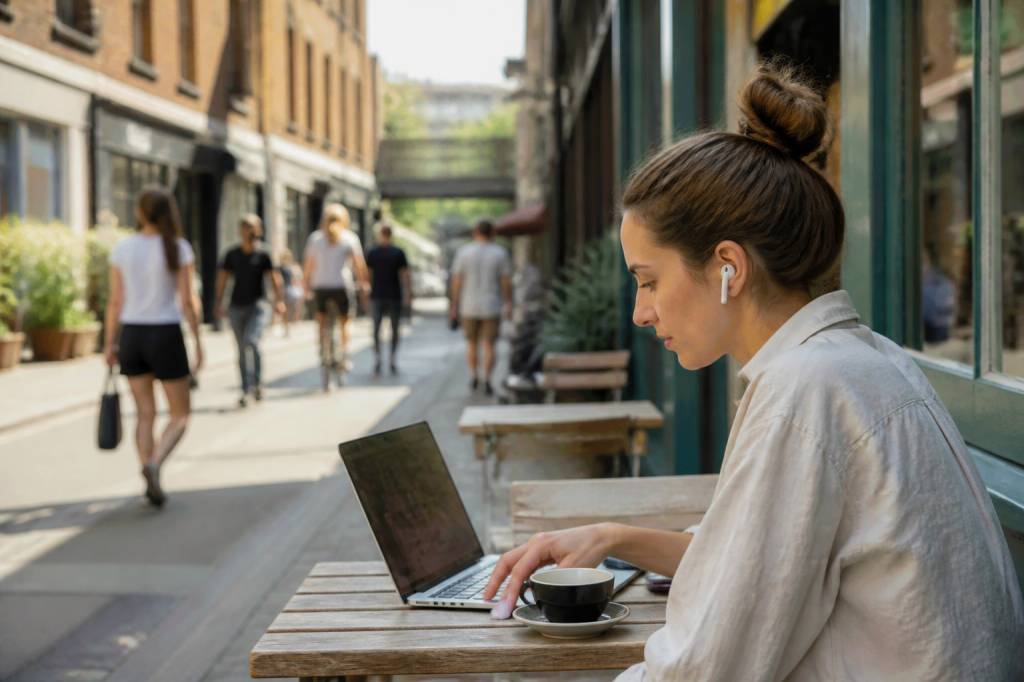
Digital nomads are no longer a niche group of remote workers passing through British cities with a laptop and a flat white. They are now part of the urban rhythm. In places like London, Manchester, Bristol, Edinburgh and Brighton, they are influencing where people live, how neighbourhoods feel, and which local businesses thrive.
This shift is not dramatic in one single moment. It happens gradually, through thousands of small decisions: where to rent for a month, which café has reliable Wi-Fi, which area feels safe after dark, and which neighbourhood has enough energy to make working from home feel less like being stuck at home. The result is visible on high streets, in coworking spaces and in the housing market. For some residents, this brings new life and spending power. For others, it raises concerns about affordability and changing local character.
Why British cities attract digital nomads
British cities offer a mix that is hard to beat for remote workers. There is good transport, a strong café culture, a wide choice of accommodation, and enough services to make short-term living straightforward. Add fast internet, time zone overlap with Europe and North America, and a steady flow of cultural events, and you have a practical base for people who work from anywhere.
London remains the obvious magnet, but it is not the only one. Manchester draws people with its lower living costs and lively city centre. Bristol appeals to those who want a creative, independent feel. Edinburgh combines history with a compact layout that works well for walking between meetings, cafés and home. Even smaller cities are seeing more short stays from remote professionals who want a different pace without giving up urban convenience.
For digital nomads, the appeal is simple:
- Fast transport links to airports and rail hubs
- Reliable broadband in most central areas
- Plenty of cafés, libraries and coworking spaces
- Accommodation options from serviced apartments to short lets
- Access to restaurants, parks, museums and evening activities
That combination makes British cities especially attractive for people who move every few weeks or months. It also means they tend to spend money locally in a very visible way.
What changes first in a neighbourhood
The first signs are often practical rather than glamorous. A café adds more plugs. A coworking space opens on a side street. A convenience store starts stocking better lunch options. A neighbourhood that once quietened down after 6 pm begins to stay busy later into the evening.
Digital nomads tend to look for the same things local residents value: decent coffee, walkability, safety, and a sense that the area has enough going on to make daily life easy. As a result, they often cluster in neighbourhoods that already have a strong independent business scene. Think Shoreditch, Peckham, Hackney, South Bank, Manchester’s Northern Quarter, Bristol’s Stokes Croft or Edinburgh’s New Town.
These areas usually benefit first from the extra footfall. Bakeries sell more pastries. Local lunch spots see longer queues. Corner shops get new customers who need everything from phone chargers to salad boxes. For business owners, this can be a welcome boost, especially during weekdays when tourism is not always enough to fill tables.
But the change is not only economic. The atmosphere shifts too. More laptops on tables. More people arriving with backpacks and headphones. More midday meetings in cafés. For some residents, this brings energy. For others, it can feel like the neighbourhood is becoming a work lounge for people who are only temporary visitors.
The housing effect is real
The biggest tension usually comes from housing. Digital nomads often want furnished, flexible accommodation with short leases. That demand encourages landlords and property managers to cater to a higher-paying short-term market. In some areas, this can reduce the supply of longer-term rentals and push prices up.
This is especially noticeable in neighbourhoods close to city centres, universities or major stations. A flat that might once have been rented to a local family for a year is now advertised for monthly stays. The apartment may look spotless, the booking process may be easy, and the service may be excellent. But the wider effect can still be a tighter rental market for local people.
That does not mean digital nomads are the only cause of housing pressure. They are one part of a larger picture that includes tourism, investor ownership, planning rules and wider shortages of rental homes. Still, their preferences matter. When enough people want flexible city living, the market adjusts quickly.
In practical terms, this can mean:
- More serviced apartments and aparthotels in central areas
- Higher demand for medium-term lets
- Less availability of affordable rentals near transport hubs
- More competition for well-located furnished flats
For neighbourhoods, the question is not whether change happens. It is who benefits from it, and who gets priced out.
Cafés, coworking spaces and the new daytime economy
One of the clearest signs of digital nomad influence is the rise of the daytime economy. People who work remotely need places to sit, charge devices, and stay productive. That creates steady demand for cafés, coworking venues and flexible spaces that were once less central to neighbourhood life.
A good café can now function like a mini office. The best ones are easy to spot: strong Wi-Fi, enough seating, a calm atmosphere, and staff who do not mind if someone stays for a couple of hours over one coffee and a sandwich. For local businesses, this can be helpful, but it also comes with trade-offs. Tables turn over more slowly. Noise levels shift. The line between hospitality and workspace gets blurred.
Coworking spaces have also multiplied in British cities. Some are sleek and corporate. Others are more casual and community-focused. They often become meeting points where freelancers, founders and remote employees mix. This can help build local networks, which is useful for cities trying to attract talent and investment.
At street level, the effect is easy to see. Neighbourhoods that once relied mostly on commuting workers or weekend visitors now have a more constant daytime flow. That supports lunch spots, independent grocers, gyms and dry cleaners. It can also make streets feel more active and, in some cases, safer.
How local culture is changing too
Neighbourhood life is not just about business. It is also about the social feel of a place. Digital nomads often arrive with their own habits and expectations. They may seek community events, language exchange nights, running clubs, pop-up dinners or creative workshops. If a neighbourhood can offer these, it tends to become more attractive.
This can encourage local venues to programme more events and diversify what they offer. A pub may start hosting quiz nights aimed at younger professionals. A bookshop may add talks or writing groups. A café may stay open later to catch the after-work crowd. In the best cases, this helps a neighbourhood become more vibrant without losing its local identity.
But there is also a risk of cultural drift. When too many businesses are shaped around temporary residents, the daily needs of long-term locals can be sidelined. You notice this when shops become more generic, menus get copied from one trendy area to another, and the same style of branding appears across different cities. Variety is good. Homogenisation is not.
This is why the most resilient neighbourhoods are usually the ones that balance local loyalty with new demand. They keep independent businesses, support community spaces, and avoid becoming a stage set for people passing through.
Which cities are adapting best
Some British cities are handling the rise of digital nomads better than others, mainly because they already had a mixed economy and a strong local identity. Manchester, for example, has a large enough city centre to absorb demand without being overwhelmed by it. Bristol benefits from a culture of independent businesses and a strong public conversation around sustainability and local character.
Edinburgh faces different pressures because central housing is limited and tourism is already intense. That makes short-term remote stays more sensitive. London has the largest and most obvious market, but also the deepest inequalities, so the impact varies greatly by borough. In one area, a wave of remote workers may support a struggling high street. In another, it may add to displacement.
Smaller cities and large towns are now watching closely. Some are actively trying to attract remote workers by improving coworking options, promoting lifestyle appeal and offering more flexible accommodation. The challenge is to welcome visitors without building an economy that depends too heavily on people who do not stay.
That balance matters. A city can benefit from fresh spending and new ideas. It can also lose something if its centres become too temporary, too expensive, or too tailored to outside tastes.
What this means for local businesses
For local businesses, digital nomads are both an opportunity and a test. They spend on coffee, meals, transport, wellness, day trips and accommodation. They are often happy to pay for convenience and quality. That is good news for businesses that can respond quickly.
The most successful places usually do a few things well:
- Offer reliable Wi-Fi and power access
- Keep opening hours flexible
- Make it easy to book tables, rooms or desks online
- Provide clear information for short-stay visitors
- Keep a strong local identity rather than chasing every trend
Accommodation providers are adapting too. Hotels are adding work desks and longer-stay packages. Serviced apartments are promoting weekly cleaning and laundry. Some guesthouses are positioning themselves as quiet, work-friendly bases rather than just overnight stops. This is particularly useful in cities where visitors want to mix work with local exploration.
Food and drink businesses are also changing their offer. Brunch remains popular, naturally, but so do all-day menus, takeaway lunches and evening options for people who have spent the day on calls. A venue that can serve breakfast, lunch and a relaxed dinner has a better chance of capturing the remote worker market.
The street-level reality residents notice
Ask long-term residents what changes first and the answers are usually very practical. More people in the weekday café queue. More parcel deliveries to serviced flats. More quiet daytime traffic and fewer office commuters. Sometimes, there is a friendlier atmosphere. Sometimes, there is simply more noise.
Some residents appreciate the extra life. A neighbourhood with more remote workers may feel less empty during the day. Local parks can be busier. Independent shops may survive longer because they have more customers. Public spaces can feel more active and less neglected.
Others feel the pressure more sharply. Rents may rise. Favourite cafés may become too crowded. A pub that used to feel local may start catering mostly to short-stay visitors. The pace of change can be unsettling, especially when people feel they have no say in it.
That is why local planning, housing policy and business support matter. Cities cannot just welcome digital nomads and hope the rest sorts itself out. They need rules that protect residential supply, support local businesses and keep neighbourhoods livable for the people who are there all year.
A city life that is becoming more fluid
Digital nomads are changing British cities by making them more flexible, more connected and, in some areas, more expensive. They bring spending power, daytime activity and demand for better services. They also accelerate housing pressure and push neighbourhoods to adapt quickly.
For visitors, this can create a smoother and more enjoyable stay. For cities, it can mean stronger cafés, livelier streets and more business for local operators. But the long-term question remains the same: how do you welcome mobile workers without turning neighbourhoods into something temporary and hard to recognise?
The answer is likely to be different in each city, and even in each district. Some places will lean into the opportunity. Others will need stronger protections. What is clear is that digital nomads are no longer just passing through British cities. They are helping shape how those cities work, look and feel, one neighbourhood at a time.